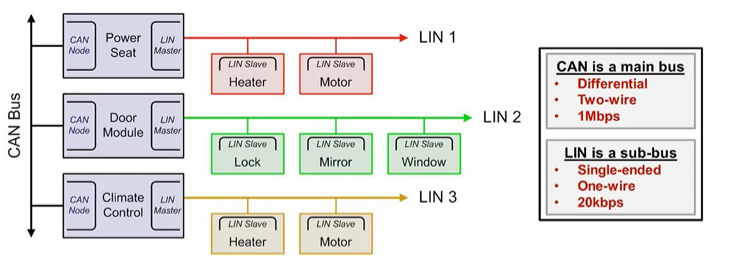
Modern vehicles use multiple communication networks to connect electronic systems. Two of the most common are CAN Bus (Controller Area Network) and LIN Bus (Local Interconnect Network).
Although both enable communication between electronic components, they are designed for different purposes.
What is CAN Bus?
CAN Bus is a high-speed communication protocol used for safety-critical and performance-related vehicle systems.
Typical applications include:
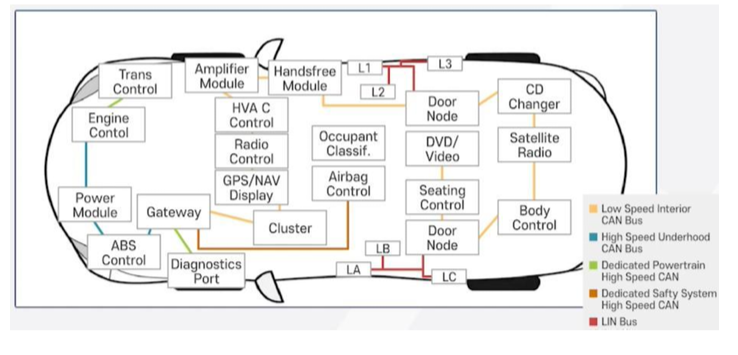
Engine Management
ABS
Transmission
Airbag Systems
Instrument Cluster
What is LIN Bus?
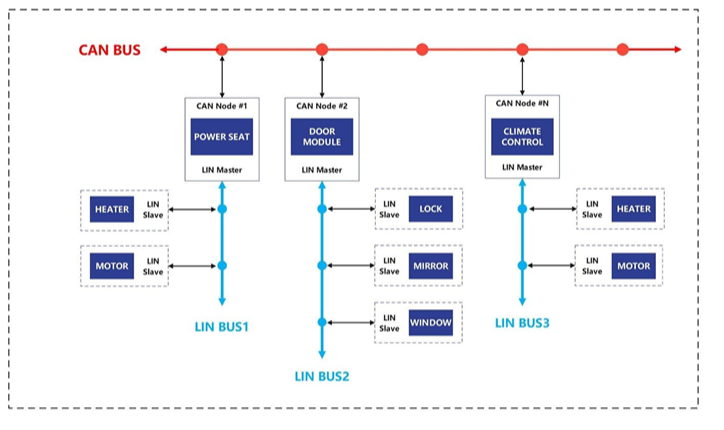
LIN Bus is a lower-speed communication protocol designed for simpler electronic devices.
It is commonly used for:
Power Windows
Door Modules
Seat Controls
Interior Lighting
Mirror Adjustment
Key Differences
| Feature | CAN Bus | LIN Bus |
| Speed | High | Low |
| Reliability | Very High | Moderate |
| Cost | Higher | Lower |
| Wiring Complexity | Moderate | Simple |
| Typical Applications | Engine, ABS, Transmission | Doors, Seats, Mirrors |
Which One is Better?
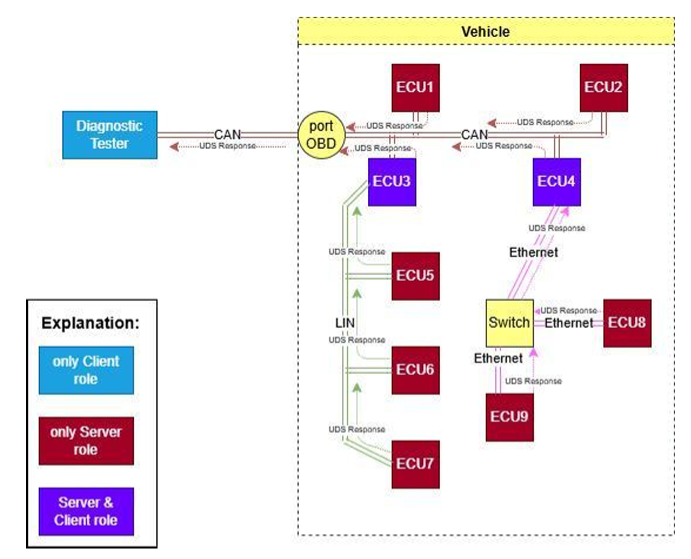
Neither protocol is universally better. They complement each other within modern vehicle architectures. CAN Bus is ideal for high-speed, safety-critical communication, while LIN Bus provides a cost-effective solution for simpler control functions.
Conclusion
Understanding both CAN Bus and LIN Bus helps technicians diagnose communication issues more efficiently and supports better decision-making during vehicle maintenance and system development.